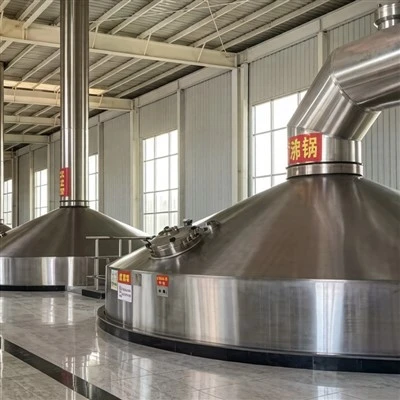
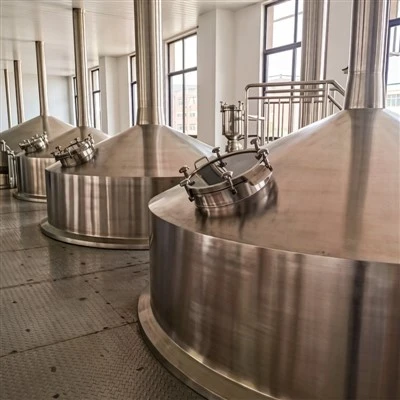
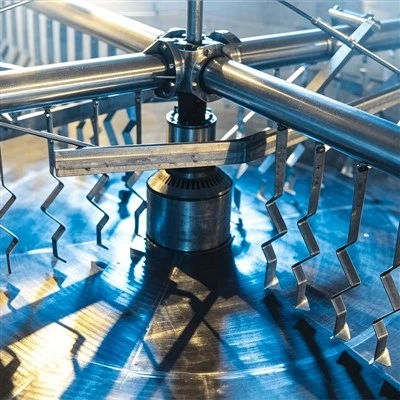
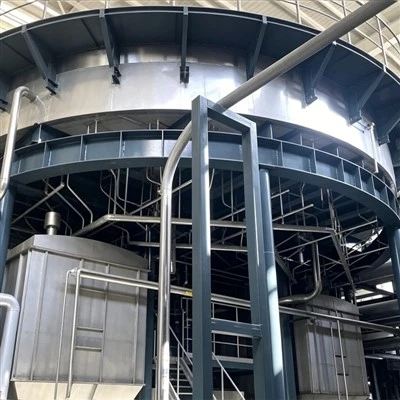
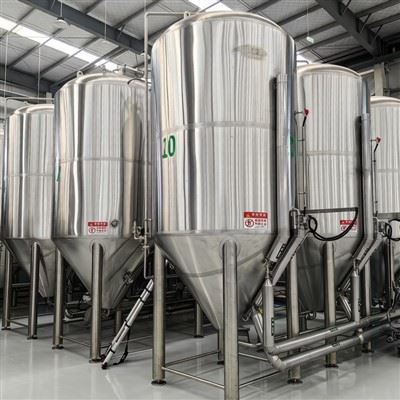
Cleaning and Sanitization: Immediately after production, circulate hot water (70–80°C) through the mash tun, lauter tun, boiling kettle, and piping to remove wort or sugar solution residues. If necessary, use a food-grade alkaline cleaner (e.g., NaOH) to soak and remove protein deposits; finally, rinse with purified water until neutral and drain all standing water to prevent microbial growth and scaling.
Sealing Integrity Check: Before startup, inspect manways, sight glasses, valve flanges, and agitator shaft stuffing boxes for leaks; immediately tighten or replace components if gaskets are aged or bolts are loose.
Drive System Inspection: Monitor the operating sounds of the gear reducer, motor, and agitator shaft to ensure there are no abnormal noises; check bearing temperatures (typically ≤60°C) and oil levels to ensure proper lubrication.
Instrumentation Calibration: Verify the accuracy of readings from thermometers, pressure gauges, and flow meters; recalibrate or replace sensors if deviations exceed ±2°C or ±1%.
Monthly maintenance:
- Check the wear and concentricity of the mixing blades, and repair or replace the shaft sleeve if the wear exceeds the limit.
- Check the quality of the reducer lubricating oil and replace it if it is emulsified or contains impurities (usually N46/N68 industrial gear oil).
- Use an endoscope to spot-check corrosion or scaling on the inner wall of the pipeline, and pickle and remove scale if necessary.
Seasonal/Annual Maintenance:
- Perform a comprehensive teardown inspection of the heating steam coils for leaks and remove scale buildup to ensure thermal efficiency.
- Test the sensitivity of safety valves, emergency stop buttons, and overload protection devices to ensure compliance with safety standards.
- Clean dust from electrical control cabinets, tighten wiring terminals, and inspect for potential hazards related to aging wiring.