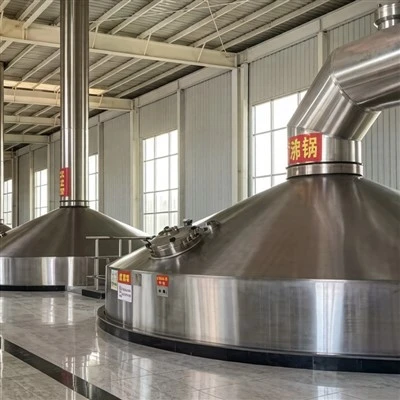
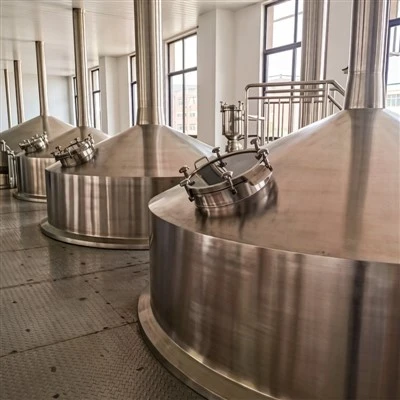
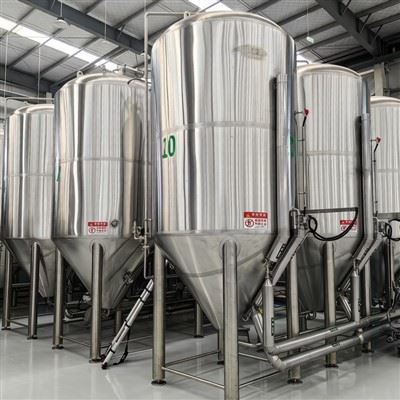
As the market for fresh craft beer booms, every aspiring craft beer entrepreneur faces the task of selecting home-brewing or micro-brewing equipment that is both user-friendly and reasonably priced.
Equipment Material.
A common practice among many manufacturers nationwide is to cut corners on the material of the inner tank-substituting Grade 304 stainless steel with Grade 201 to reduce costs by up to 30%. The major drawback of Grade 201 stainless steel is that once a weld fails, it is extremely difficult to repair properly. It is also prone to rusting; a few drops of water can cause rust to appear within just three days. Furthermore, if the inner tank wall is too thin-and given that fermentation tanks are fully enclosed units without manholes, making it impossible for the average person to inspect the material or thickness-performance suffers. Fermentation generates significant gas pressure; thinner material withstands less pressure, and poor weld quality increases the risk of gas leaks, all of which can severely impact the quality of the beer.
Pipe fittings, valves, and various accessories
If low-quality, cheap pipe fittings, valves, and accessories are used, they will quickly rust, leak, or fail due to shoddy manufacturing and cost-cutting measures. Such equipment wastes electricity, water, and labor, leads to significant beer loss and high costs, and causes operational issues-such as fermentation tank leaks and frequent electrical component failures. Ultimately, the beer becomes difficult to produce, tastes poor, is hard to sell, and fails to meet the desired quality standards.
The inner tank must be made of food-grade 304 stainless steel with a thickness of at least 2mm; the interior and exterior surfaces should be polished to a roughness of Ra ≤ 0.4μm to eliminate sanitary dead zones that could compromise beer flavor or equipment longevity.
Prioritize models featuring conical fermentation tanks equipped with precision temperature-control jackets-maintaining accuracy within ±0.5°C-and paired with a glycol-based cooling system to ensure fermentation stability.
Ensure the equipment includes a comprehensive, automated Clean-in-Place (CIP) system to prevent microbial contamination caused by incomplete manual cleaning and to minimize beer loss.