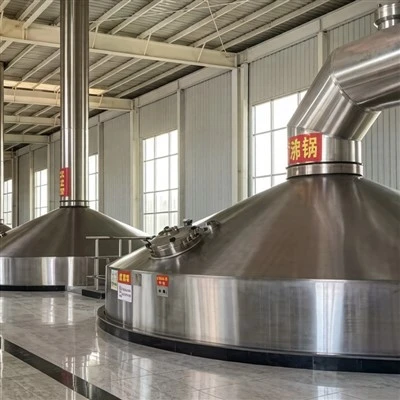
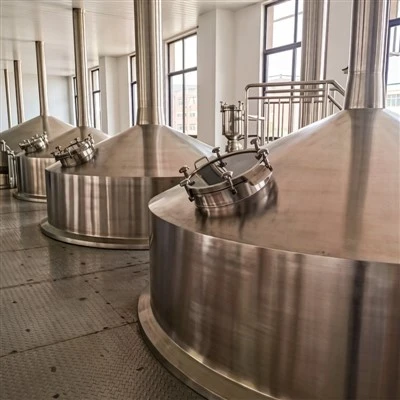
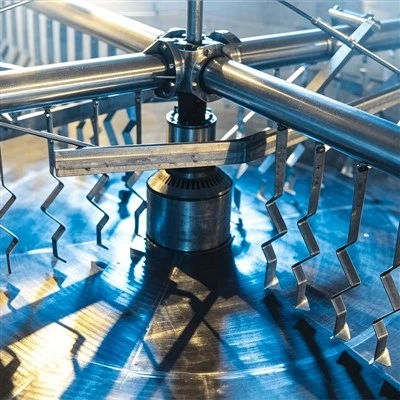
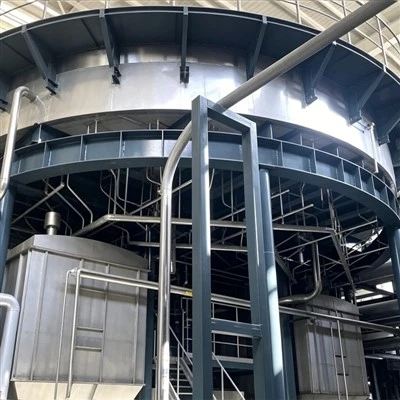
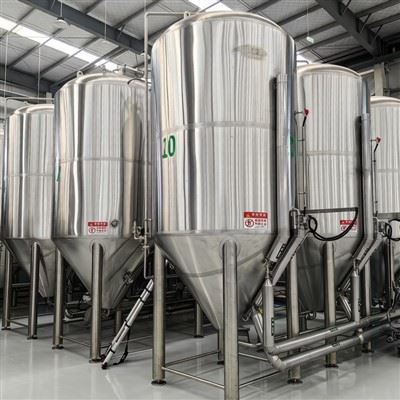
Mashing is a complex biochemical process. Within mashing equipment, heating and agitation are used to optimize temperature and pH levels for enzymatic activity; this facilitates the conversion of insoluble substances into soluble ones-which then dissolve-to produce wort meeting specific requirements and to maximize the yield of mash extract. Agitation requirements for mashing equipment include low rotational speed, low shear, and minimal oxygen absorption. The system must ensure uniform mixing of the mash and efficient heat transfer from the steam jacket to the mash (maintaining a uniform temperature distribution within the vessel) while avoiding the use of internal baffles for hygienic reasons. As mashing equipment scales up in size, there is an increasing demand for higher production efficiency and lower energy consumption. Consequently, selecting an agitator that offers uniform mixing, effective heat transfer, and low power consumption is crucial.
Based on the operational requirements-specifically the absence of internal baffles, steam entry at the top of the jacket, and condensate discharge at the bottom-the optimal flow pattern for the agitator is illustrated in Figure 1. The rotation of the agitator drives the fluid in the central region downward via the inner blades, while the outer blades propel the fluid upward along the vessel's inner wall. This creates a large-scale circulation of material within the vessel, establishing a counter-current heat exchange relationship with the jacket; this accelerates heat transfer between the inner and outer fluid zones and ensures the jacket's heat is evenly distributed throughout the mashing vessel.