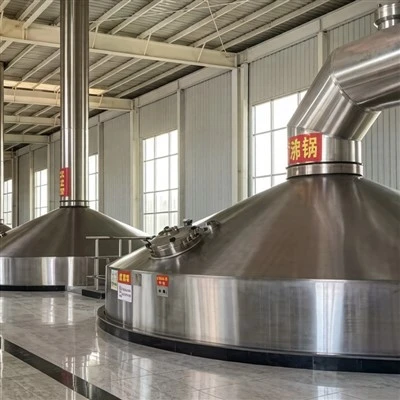
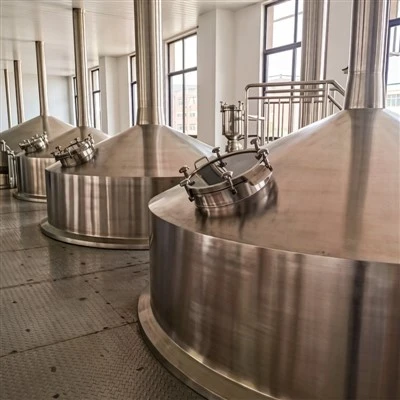
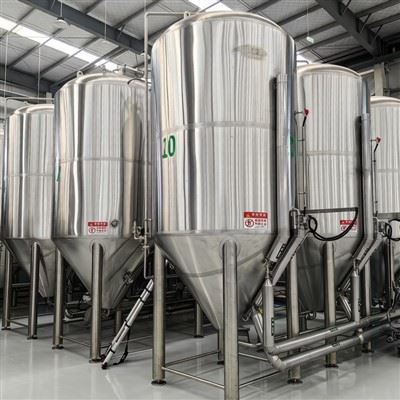
The primary materials used for fermentation equipment include stainless steel, carbon steel, glass, and plastic, with stainless steel being the most widely used.
1. Stainless Steel
The most common grades are 304 and 316L stainless steel. 304 stainless steel offers good corrosion resistance and lower cost, making it suitable for most components such as tank bodies and piping. 316L stainless steel provides superior corrosion resistance-particularly against chloride ions-and is frequently used for critical parts that come into direct contact with the beer to prevent metal ion contamination.
2. Carbon Steel
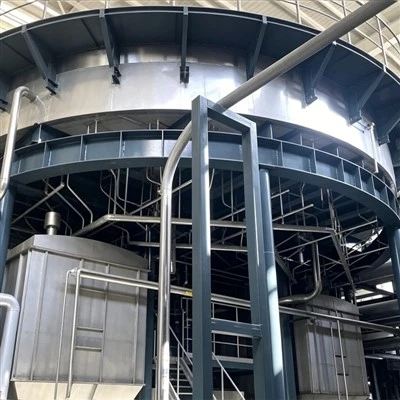
Carbon steel is cost-effective and strong but has poor corrosion resistance; it typically requires anti-corrosion coatings or hot-dip galvanizing. It is generally used for structural components-such as the frames of large fermentation units-where high corrosion resistance is not required.
3. Glass
Glass is transparent, allowing for easy observation of the fermentation process, but it is fragile. It is primarily used for small-scale laboratory equipment or display fermenters and is unsuitable for large-scale industrial production.
4. Plastic
Plastics such as food-grade polyethylene (PE) are lightweight, inexpensive, easy to process, and offer some degree of corrosion resistance. However, due to their limited strength and durability, they are generally used for small home-use fermentation vessels rather than large-scale industrial production.